Uncategorized
Understanding Data Privacy Risks: Key Takeaways to Protect Your Business in 2026
Oct
Introduction
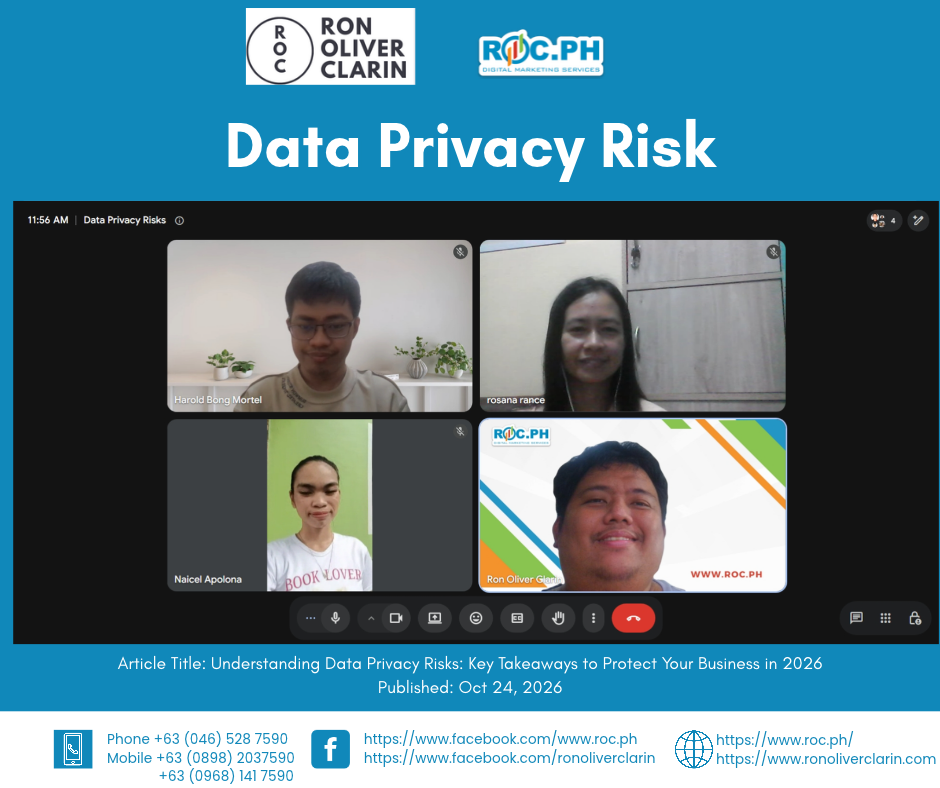
In today’s highly connected digital age, personal and business information is constantly being shared, stored, and processed. But how safe is your data? On October 23, 2026, we hosted an exclusive educational webinar titled “Data Privacy Risks”, led by Ron Oliver Clarin, a Certified Data Privacy Officer (DPO) recognized by the National Privacy Commission (NPC) of the Philippines.
If you missed the live session, don’t worry! We have compiled the essential highlights and practical tips discussed during the event to help you protect information, build trust, and stay compliant
The Rising Cost of Exposure
Taking data privacy for granted is a costly mistake. During the session, it was highlighted that the global average cost of a data breach in 2026 has reached a staggering $4.99 Million. Beyond the financial fines and penalties, the hidden cost lies in the loss of customer trust—something that takes years to build and only seconds to destroy.
Data Privacy vs. Data Security: What’s the Difference?
One of the most common misconceptions is treating Data Privacy and Data Security as the exact same thing. As explained in the webinar:
- Data Privacy (The “Why” & “What”): This focuses on governance, consent, and user rights. It sets the rules on why data is collected and how it should be used with proper authorization.
- Data Security (The “How”): This involves the technical safeguards against breaches, such as encryption, firewalls, and strict authentication controls.
In short: Security is the lock on the door; Privacy determines who is allowed to have the key.
Recognizing Common Privacy Risks
To protect your organization, you must first understand the threats. The webinar identified four major risks businesses face today:
- Phishing Attacks: Deceptive emails designed to steal user credentials.
- Insider Threats: Accidental or malicious data exposure by employees.
- Unsecured Networks: Vulnerabilities when accessing company systems via public Wi-Fi.
- Shadow AI: The use of unapproved AI tools in the workplace that may inadvertently expose sensitive company data.
The 4-Step Data Handling Lifecycle
Proper data management is a continuous process. Implementing a solid data handling lifecycle ensures you stay compliant:
| Lifecycle Stage | Core Objective | Key Action |
|---|---|---|
| 1. Collect | Minimize exposure | Only gather data that is strictly necessary for operations. |
| 2. Store | Protect storage | Ensure databases are fully encrypted and secure. |
| 3. Protect | Restrict access | Implement strict controls so only authorized personnel view data. |
| 4. Destroy | Safe disposal | Practice permanent data deletion when no longer needed. |
Building Good Habits
Data privacy is not just an IT department issue—it is everyone’s responsibility. Individuals should enable multi-factor authentication (MFA) and regularly review app permissions. Meanwhile, organizations must enforce strict access limits, train staff on security protocols, and update internal policies annually.
Keep Learning with Us
Protecting data is an ongoing journey. Thank you to everyone who attended the live session! If you want to dive deeper into this topic or access the webinar recording, explore our comprehensive resources on our website’s courses page. For updates on our next educational sessions, bookmark our events page.
